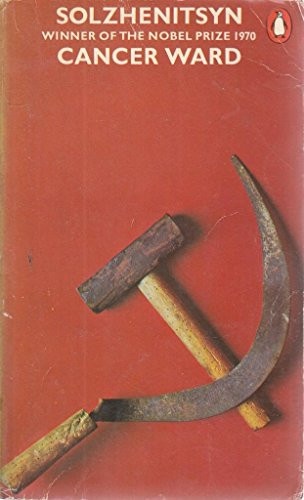
"Cancer Ward" is set in a provincial Soviet hospital during the mid-1950s, a period of flux following Stalin's demise. The narrative centers on Oleg Kostoglotov, a man recently released from a labor camp, who finds himself confronting a grim diagnosis of cancer. He is admitted to a ward where patients, stripped of their political and social standing by their shared affliction, are forced to grapple with their mortality. This confined environment becomes a potent symbol of the broader Soviet society, where survival, both physical and psychological, is a constant battle, and the shadow of past political repressions looms large over the present.
The novel intricately weaves the stories of its diverse cast. Oleg, haunted by his years of imprisonment and the injustices he suffered, must now face the physical ravages of disease. His encounters are particularly poignant with figures from his past, including his former doctor and, crucially, Pavel Rusanov, a man who played a role in his persecution and now finds himself in the same ward, a bitter irony. The central themes explore the fragility and resilience of the human body, the dehumanizing effects of totalitarian regimes, the search for personal meaning and dignity amidst suffering, and the complex interplay between memory, conscience, and the struggle for survival in an oppressive system.
What makes "Cancer Ward" compelling is its raw and honest depiction of illness and death, not just as physical events but as catalysts for profound introspection and moral reckoning. Solzhenitsyn masterfully uses the hospital setting to expose the hypocrisies and cruelties of Soviet life, contrasting the patients' shared vulnerability with the ideological rigidity and bureaucratic indifference that still pervades society. The novel’s power lies in its intimate exploration of individual lives caught in the grip of both disease and political oppression, forcing characters and readers alike to confront fundamental questions about life, death, and the enduring human spirit.