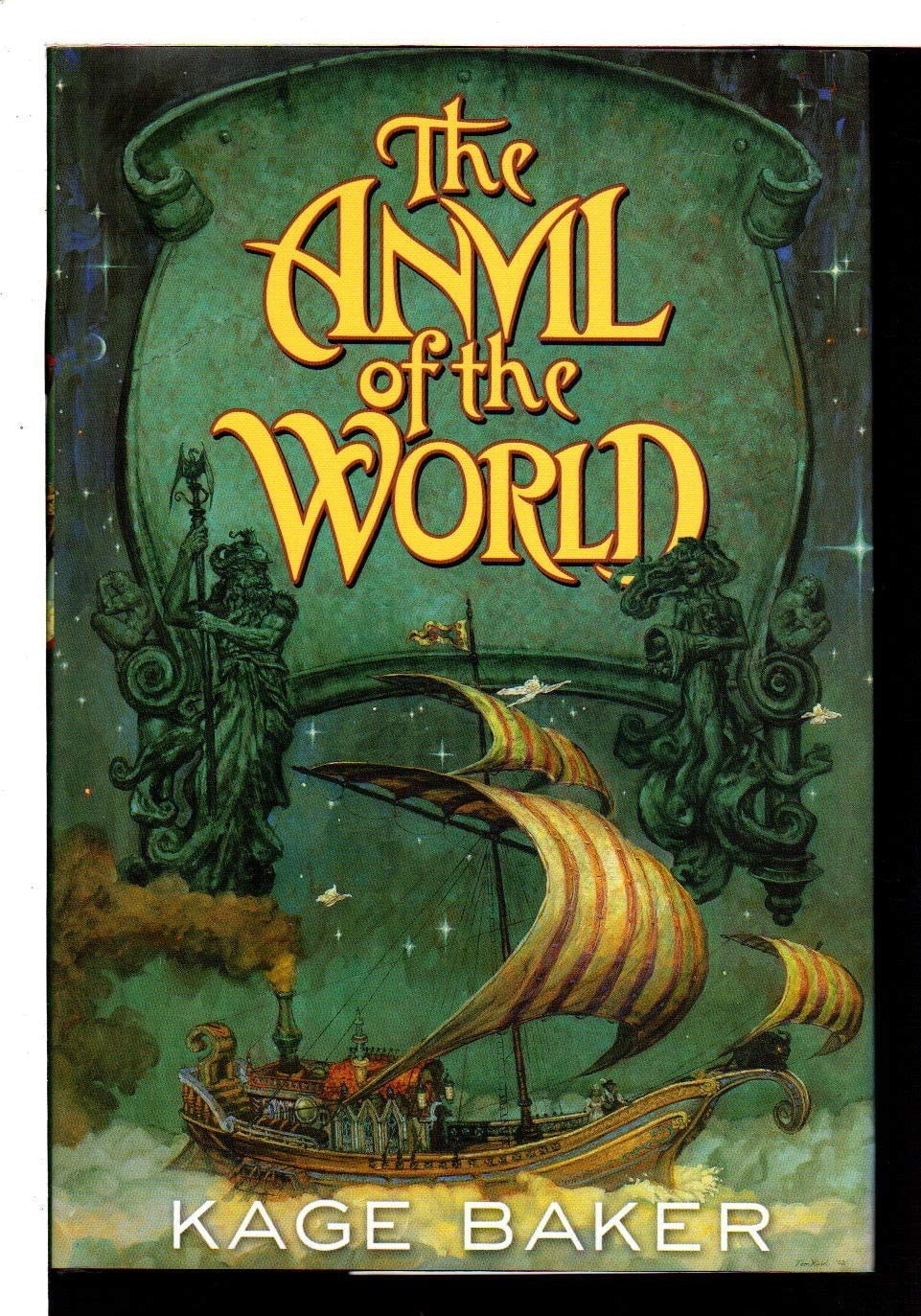
Kage Baker’s The Anvil of the World follows the long, complicated arc of a civilization shaped by invention, exploitation, and the stubborn will of individuals to survive—and to change what they inherit. Across shifting eras and perspectives, the story explores how technology and power travel through time, leaving behind both miracles and scars. What begins as a tale of craftsmanship and consequence expands into a broader meditation on how societies build their futures, often by repeating the same mistakes in new forms.
At its heart, the novel is driven by characters who confront moral choices under pressure, discovering that “progress” is rarely clean or evenly distributed. As the narrative reveals the hidden costs of ambition, it also highlights the quiet ingenuity of people who refuse to accept predetermined outcomes. Baker’s blend of historical texture and speculative reach turns the book into a compelling study of cause and effect—where every act of creation can become an anvil, forging not only tools and institutions, but also the destinies of those who come after.