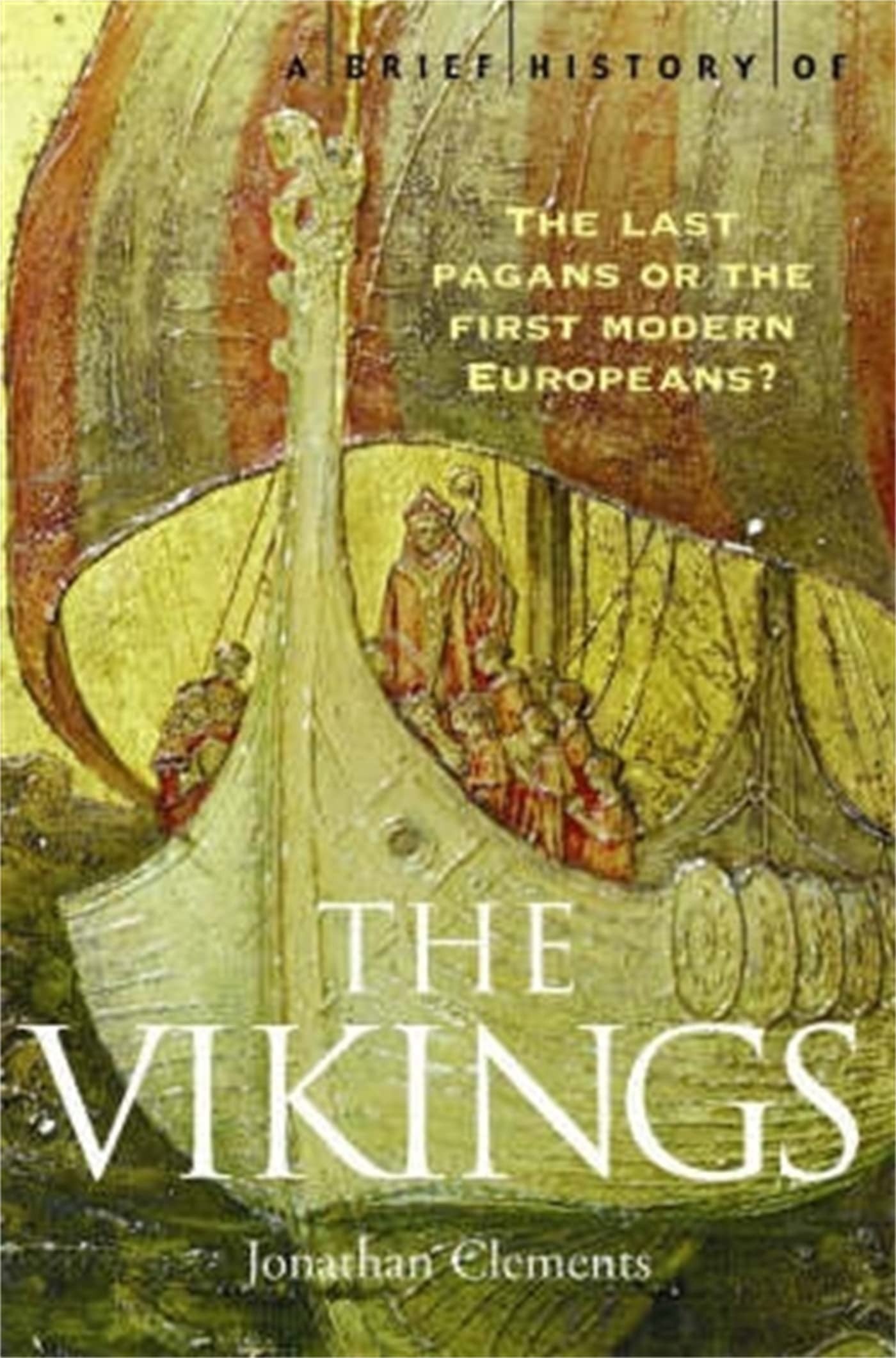
Jonathan Clements' "A Brief History of the Vikings" endeavors to present a comprehensive yet accessible overview of the Viking Age, moving beyond sensationalized portrayals. The book delves into the multifaceted nature of Viking society, exploring their renowned seafaring capabilities, their extensive trade networks that spanned vast distances, and their considerable impact on the political and cultural landscapes of Europe.
The central inquiry of this work lies in its subtitle: whether the Vikings should be viewed as the final practitioners of ancient pagan traditions or as precursors to modernity in Europe. Clements examines their societal structures, their transition from Norse paganism to Christianity, and their roles as explorers, settlers, and traders whose actions significantly shaped the development of various European regions. The book aims to portray them as complex figures, more than just warriors.
This history is compelling due to its effort to provide a nuanced and balanced perspective on a frequently misunderstood civilization. By exploring the dual identity of the Vikings—as inheritors of old ways and agents of profound change—Clements invites readers to reconsider their historical significance. The book's appeal stems from its re-evaluation of the Viking legacy and their often-underestimated influence in forging the early modern world.