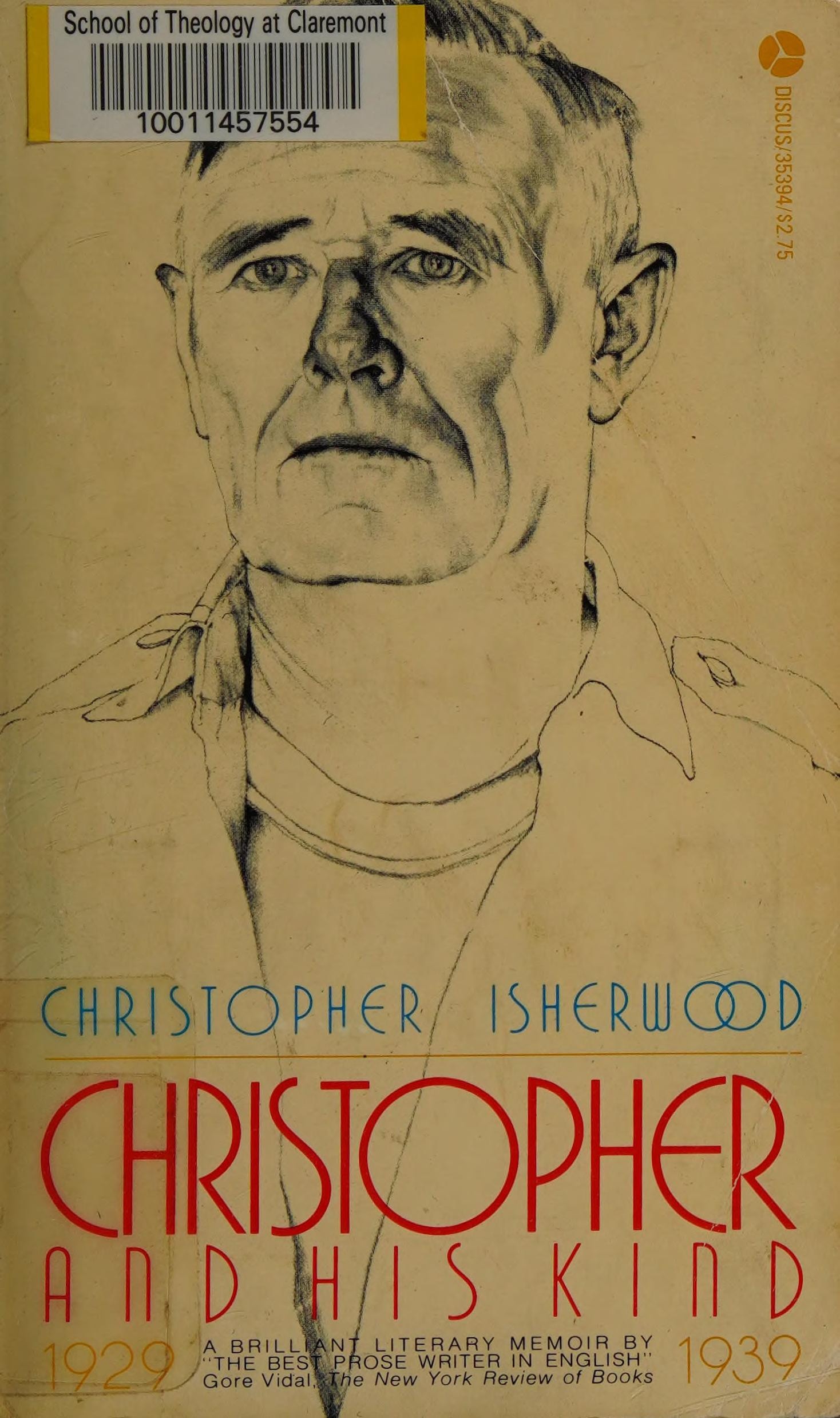
This memoir by Christopher Isherwood offers an intimate account of his decade spent in Germany, predominantly Berlin, from 1929 to 1939. Isherwood himself serves as the central figure, chronicling his experiences as a young English writer who sought creative freedom and personal liberation in the vibrant, bohemian, and sexually fluid environment of Weimar Republic Berlin. The narrative unfolds through his keen observations of the city's artistic and intellectual circles, his expatriate life, and his various romantic relationships, often with young German men. He chose to immerse himself in the city's hedonistic culture, deliberately maintaining a personal, observational distance from the increasingly alarming political shifts and the menacing rise of Nazism around him.
The book profoundly explores themes of identity, particularly Isherwood's evolving understanding and embrace of his homosexuality in an atmosphere less constrained than his native England. It masterfully contrasts the pursuit of personal pleasure and artistic autonomy with the encroaching, terrifying reality of fascism. The memoir's compelling nature stems from Isherwood's remarkably sharp, ironic, and insightful prose, which vividly captures both the exhilarating spirit of Berlin on the brink of catastrophe and the palpable sense of dread. Readers are drawn into his personal world through his candid portrayal of relationships, his nuanced insights into societal transformation, and his thoughtful examination of how an individual navigates monumental historical change while striving to maintain personal integrity and artistic purpose.